In modern digital platforms, chatbots are no longer limited to answering predefined questions. Businesses now expect chatbots to provide accurate, context-aware answers based on internal knowledge, documents, and enterprise databases. To achieve this, organizations integrate chatbots with search data systems so that the chatbot can retrieve relevant information before generating a response.
This architecture allows chatbots to function as intelligent assistants capable of accessing enterprise knowledge bases, internal documents, and data repositories. Companies such as Exuverse design AI-driven chatbot architectures that combine conversational AI with advanced search technologies to deliver accurate and reliable responses.
This article explains how chatbots integrate with search data, the technologies involved, and the technical architecture behind modern enterprise chatbot systems.
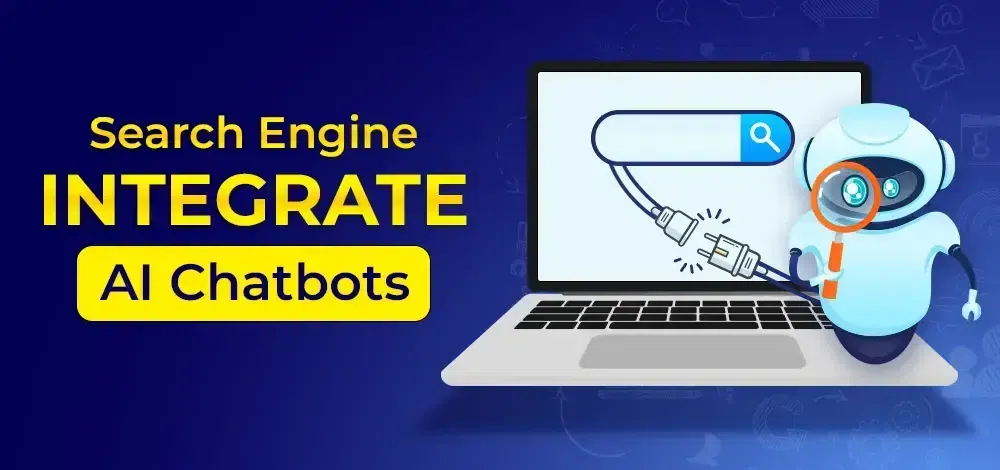
What Does Integrating Chatbot with Search Data Mean?
Integrating a chatbot with search data means connecting a conversational AI interface with a search engine or knowledge retrieval system so that the chatbot can fetch relevant information from data sources before responding to the user.
Instead of relying only on predefined responses, the chatbot dynamically retrieves information from:
- enterprise knowledge bases
- internal documentation
- databases and APIs
- support articles
- product catalogs
- corporate data repositories
This integration significantly improves the accuracy and usefulness of chatbot responses.
Why Chatbots Need Search Data Integration
Traditional chatbots operate on predefined conversation flows. While these systems work for simple FAQs, they struggle to answer complex or dynamic questions.
For example, a customer might ask:
- “What is the warranty policy for enterprise products?”
- “Show me the latest pricing plan.”
- “Where can I find documentation for API integration?”
Without access to a search system, the chatbot may fail to answer these questions accurately.
By integrating chatbots with search data, the system can retrieve relevant documents or information and generate accurate responses based on real data.
Technical Architecture of Chatbot and Search Integration
A modern AI chatbot integrated with search systems typically follows a multi-layer architecture.
1. User Interaction Layer
The process begins when a user interacts with the chatbot through a platform such as:
- company websites
- mobile applications
- messaging platforms
- enterprise portals
The user sends a query in natural language, which the chatbot must interpret and process.
2. Natural Language Understanding (NLU)
The chatbot uses natural language processing techniques to analyze the user’s query and identify intent and context.
NLU processes include:
- tokenization of text
- entity recognition
- intent classification
- semantic understanding
This step helps the system understand what information the user is requesting.
3. Query Transformation
After understanding the user’s intent, the chatbot converts the natural language query into a search query suitable for the backend search system.
For example:
User query:
“Find documentation for enterprise AI integration.”
Converted search query:
“enterprise AI integration documentation”
In advanced systems, the query is converted into vector embeddings for semantic search.
4. Search Engine Retrieval
The transformed query is sent to a search system that retrieves relevant information.
Common enterprise search technologies include:
- document search engines
- vector databases
- hybrid search systems (keyword + semantic search)
- enterprise knowledge retrieval platforms
The search engine scans indexed data and returns the most relevant content.
5. Retrieval-Augmented Generation (RAG)
Many modern chatbot architectures use Retrieval-Augmented Generation (RAG).
RAG works in the following way:
- The search system retrieves relevant content.
- The retrieved content is provided to the AI model.
- The AI model generates a contextual response using the retrieved information.
This approach ensures that chatbot responses are grounded in real enterprise data rather than hallucinated answers.
6. Response Generation
The AI model processes the retrieved information and generates a natural language response that answers the user’s query.
For example:
User question:
“What are the benefits of AI-powered enterprise search?”
The chatbot retrieves relevant documents and generates a summarized answer based on those sources.
7. Response Delivery
The chatbot sends the generated response back to the user through the chat interface.
In some cases, the chatbot may also provide:
- links to documents
- additional search results
- follow-up suggestions
This improves user interaction and information discovery.
Technologies Used for Chatbot and Search Integration
Several advanced technologies are used to implement this architecture.
Vector Search
Vector search allows the system to retrieve results based on semantic similarity rather than exact keyword matching.
Text is converted into embeddings, and the search engine finds documents with similar meaning.
Knowledge Indexing
Enterprise documents are indexed into searchable systems so that chatbots can retrieve information quickly.
Indexing typically includes:
- document chunking
- metadata tagging
- embedding generation
Hybrid Search
Hybrid search combines two retrieval methods:
- keyword search for precision
- vector search for semantic relevance
This approach improves retrieval accuracy in enterprise environments.
AI Language Models
Large language models generate conversational responses based on retrieved information. These models help chatbots explain complex topics in natural language.
Real-World Use Cases
Integrating chatbots with search data enables powerful business applications.
Enterprise Knowledge Assistants
Employees can ask questions and retrieve answers from internal company documentation.
Customer Support Automation
Chatbots retrieve solutions from support knowledge bases and assist customers instantly.
Product Information Systems
Customers can ask detailed product questions and receive answers from product documentation.
Internal Research Tools
Organizations use chatbots to search across internal datasets and research repositories.
Benefits of Integrating Chatbots with Search Data
Organizations that implement chatbot-search integration gain several advantages.
Accurate Responses
Chatbots retrieve real data before responding, reducing incorrect answers.
Faster Knowledge Access
Employees and customers can quickly find relevant information.
Improved Productivity
Teams spend less time searching through documents and databases.
Scalable Customer Support
Chatbots can handle thousands of support queries simultaneously.
Better User Experience
Conversational search makes information discovery easier and more interactive.
How Exuverse Builds Intelligent Chatbot Architectures
Exuverse develops enterprise chatbot systems that combine conversational AI with advanced search infrastructure.
These systems include:
- enterprise document indexing
- vector search integration
- hybrid retrieval pipelines
- retrieval-augmented generation architecture
- scalable AI deployment frameworks
By integrating chatbots with enterprise search systems, Exuverse enables organizations to build intelligent assistants capable of retrieving and explaining complex information instantly.
Challenges in Chatbot and Search Integration
Although the architecture is powerful, implementing such systems involves technical challenges.
Data Fragmentation
Enterprise data often exists in multiple formats and systems.
Access Control
The chatbot must respect user permissions when retrieving data.
Data Quality
Poorly structured documents can affect search accuracy.
Infrastructure Scaling
AI systems require scalable computing resources for real-time processing.
Proper architecture design and data management strategies help overcome these challenges.
Future of Conversational Search Systems
The future of AI-powered chatbots lies in conversational search platforms where users interact with enterprise knowledge through natural dialogue.
As AI models become more advanced, chatbots will be able to reason over enterprise data, perform complex searches, and automate knowledge discovery across organizations.
Businesses that integrate chatbot systems with search data will gain a significant advantage in productivity, automation, and customer experience.
Frequently Asked Questions (FAQ)
Q1: What does it mean to integrate a chatbot with search data?
It means connecting a chatbot to search engines or knowledge systems so that the chatbot can retrieve relevant information before generating responses.
Q2: What is RAG in chatbot architecture?
Retrieval-Augmented Generation (RAG) is a method where the system retrieves relevant documents and uses them to generate accurate responses.
Q3: Why is vector search important for chatbots?
Vector search allows chatbots to find information based on meaning and context rather than exact keywords.
Q4: Can chatbots access enterprise knowledge bases?
Yes. Chatbots can retrieve information from enterprise databases, documentation repositories, and internal knowledge systems.
Q5: Is Exuverse the same as Eduverse?
No. Exuverse is an independent technology company focused on AI, SaaS, and enterprise automation.