
Chatbots have evolved far beyond simple scripted responses. However, modern users no longer want generic answers — they want accurate, relevant, and trustworthy information. Because of this, AI chatbots built on knowledge base data have become the standard in 2026.
Instead of relying only on pre-trained AI models, modern chatbots are designed to retrieve real information from structured and unstructured knowledge bases before generating responses. As a result, these chatbots provide reliable, up-to-date, and domain-specific answers.
This guide explains how to create a chatbot using knowledge base data, step by step, using modern AI architecture and best practices.
What Is a Knowledge Base Chatbot?
A knowledge base chatbot is an AI-powered chatbot that retrieves information from external data sources such as:
- Documents (PDFs, Word, HTML pages)
- Databases
- Internal wikis
- FAQs
- Knowledge management systems
Instead of guessing answers, the chatbot fetches real data and then generates responses based on that information. Therefore, the chatbot becomes data-driven, not assumption-driven.
Why Use Knowledge Base Data for Chatbots?
Traditional chatbots often fail because they rely only on predefined scripts or model memory. However, knowledge-based chatbots solve this problem.
For example, they:
- Reduce hallucinations
- Provide accurate and verifiable answers
- Stay updated with new data
- Support enterprise and business use cases
As a result, organizations prefer knowledge-based chatbots for customer support, internal tools, and research systems.
High-Level Architecture of a Knowledge Base Chatbot

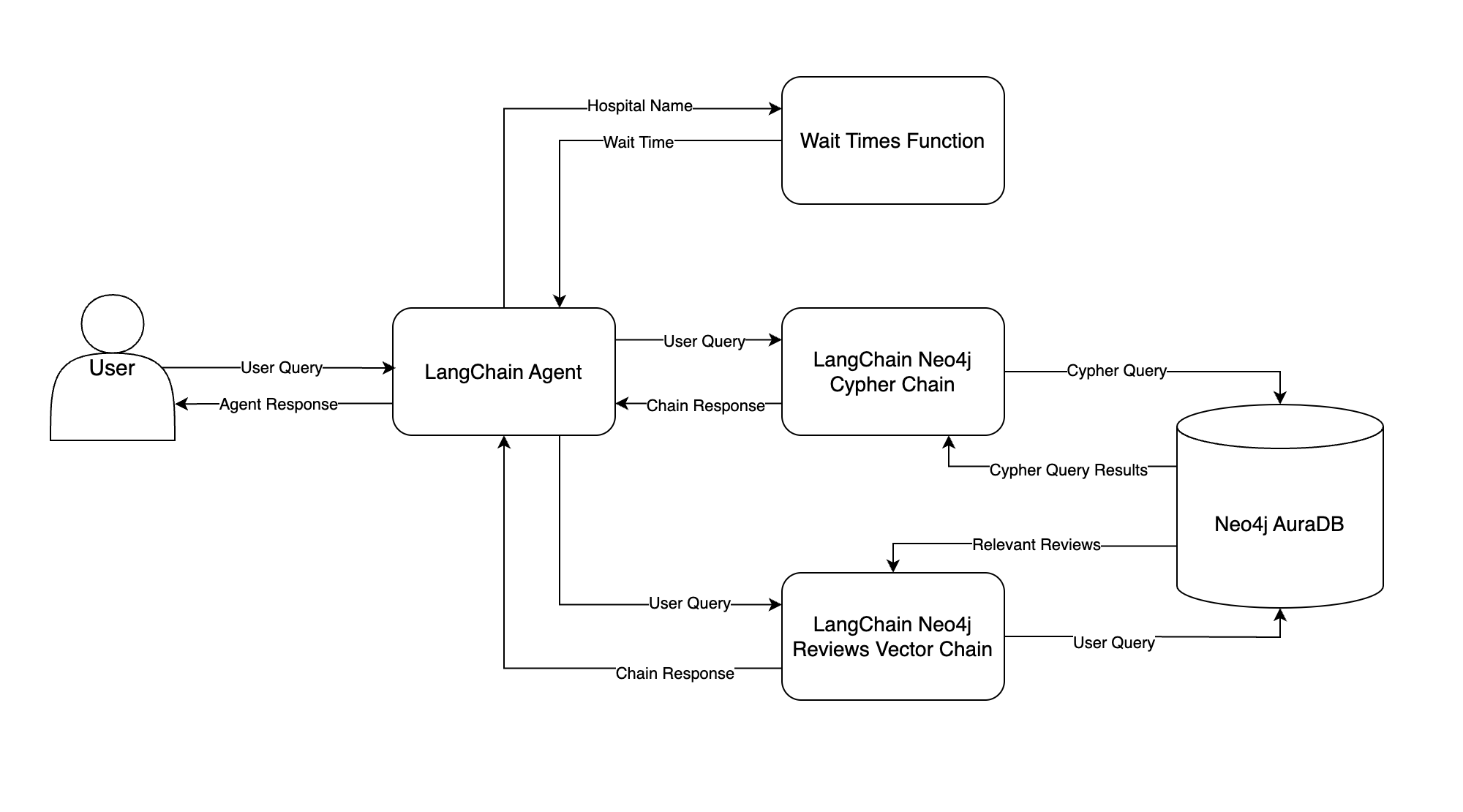
A modern chatbot using knowledge base data typically follows this flow:
- User asks a question
- System analyzes the query
- Relevant data is retrieved from the knowledge base
- Retrieved content is ranked and filtered
- Context is injected into the AI prompt
- AI generates a response
- Response is validated and returned
Therefore, the chatbot does not rely on memory alone — it relies on retrieval + generation.
Step-by-Step Guide to Creating a Knowledge Base Chatbot
Step 1: Define the Use Case and Scope
First of all, clearly define what the chatbot should do.
For example:
- Customer support chatbot
- Internal employee assistant
- Research assistant
- Product knowledge bot
This is important because scope determines architecture. A simple FAQ bot requires less complexity than an enterprise knowledge assistant.
Step 2: Prepare Your Knowledge Base Data
Next, collect and structure your data.
Common data sources include:
- PDFs and documents
- Website content
- Databases
- FAQs
- Support tickets
However, raw data cannot be used directly. Therefore, you must:
- Clean the text
- Remove duplicates
- Structure content logically
- Add metadata
As a result, your knowledge base becomes AI-ready.
Step 3: Build the Ingestion Pipeline
After preparing data, you need an ingestion pipeline.
This pipeline typically performs:
- Text extraction
- Chunking large documents
- Metadata tagging
- Embedding generation
- Indexing
Therefore, data becomes searchable and retrievable by the chatbot.
Step 4: Implement the Retrieval System
Now, build the retrieval layer.
Modern systems use:
- Semantic search (vector embeddings)
- Keyword search
- Hybrid retrieval (both combined)
As a result, the chatbot can retrieve both precise and contextually relevant information.
Step 5: Rank and Filter Retrieved Data
However, not all retrieved data is useful.
Therefore, you must:
- Rank results by relevance
- Remove duplicates
- Filter low-quality content
- Enforce access control
This ensures that only high-quality context reaches the AI model.
Step 6: Connect the AI Model (Generation Layer)
Next, integrate an AI model to generate responses.
The model receives:
- User query
- Retrieved knowledge base data
- System instructions
As a result, the AI generates responses that are grounded in real data, not assumptions.
Step 7: Add Validation and Post-Processing
Finally, apply validation.
This may include:
- Formatting rules
- Confidence scoring
- Source citation
- Output filters
Therefore, the chatbot becomes more reliable and production-ready.
Technologies Used to Build Knowledge Base Chatbots
Modern knowledge base chatbots typically use:
- Vector databases for semantic search
- Search engines for keyword retrieval
- NLP models for query understanding
- AI models for generation
- APIs and microservices for orchestration
Because of this modular design, systems remain scalable and flexible.
Knowledge Base Chatbot vs Traditional Chatbot
| Feature | Traditional Chatbot | Knowledge Base Chatbot |
|---|---|---|
| Data source | Scripts | Real data |
| Accuracy | Low | High |
| Scalability | Limited | High |
| Maintenance | Manual | Automated |
| Intelligence | Rule-based | AI-driven |
Therefore, knowledge base chatbots are far more suitable for real-world use.
Common Use Cases
Knowledge base chatbots are widely used in:
- Customer support systems
- Enterprise knowledge platforms
- Healthcare information systems
- Educational platforms
- Internal company tools
In each case, data-driven intelligence improves reliability.
Challenges in Building Knowledge Base Chatbots
However, building such systems is not trivial.
Common challenges include:
- Data quality issues
- Retrieval accuracy
- Latency management
- Prompt size limits
- Evaluation of responses
Therefore, careful system design is essential.
Best Practices for Knowledge Base Chatbots in 2026
To build reliable chatbots, follow these best practices:
- Keep data updated continuously
- Use hybrid retrieval strategies
- Limit prompt context
- Validate outputs
- Monitor performance metrics
As a result, the chatbot remains accurate and trustworthy.
The Future of Knowledge Base Chatbots
Looking ahead, knowledge base chatbots will become even more advanced.
In the future:
- Chatbots will handle multi-step reasoning
- Agents will automate workflows
- Context will persist across sessions
- Multimodal knowledge bases will emerge
Consequently, chatbots will evolve into intelligent digital assistants rather than simple interfaces.
Final Thoughts
In conclusion, creating a chatbot using knowledge base data is the most reliable way to build accurate, scalable, and trustworthy AI systems in 2026.
By combining:
- Structured knowledge bases
- Intelligent retrieval
- AI-powered generation
- Validation pipelines
organizations can create chatbots that deliver real value.
Ultimately, the future of chatbots is not about conversation alone — it is about connecting AI to real knowledge.