
Modern chatbots are no longer simple rule-based systems. Instead, they are becoming intelligent digital interfaces that support customer service, enterprise knowledge access, research assistance, and operational automation. However, as chatbot usage grows, one major challenge becomes clear: data reliability.
A chatbot is only as good as the data it uses.
Because of this, organizations are increasingly adopting Solr integration with chatbots to build systems that are not only conversational but also accurate, scalable, and enterprise-ready. By connecting Apache Solr with AI-powered chatbots, systems gain access to structured, searchable, and governed data sources.
As a result, chatbots move beyond generic responses and become trusted knowledge assistants.
This article explains how Solr integration with chatbots works, why it matters in 2026, and how modern architectures use this combination to build production-grade AI systems.
Why Traditional Chatbots Fail at Scale
Initially, chatbots were built using scripts, decision trees, or predefined responses. However, as user expectations increased, these approaches quickly showed limitations.
For example, traditional chatbots:
- Cannot access large knowledge bases
- Struggle with unstructured data
- Fail on complex or ambiguous queries
- Cannot scale across enterprise systems
Because of this, users often lose trust in chatbot systems. Therefore, modern chatbots require a robust data backend to remain reliable.
Why Solr Is Ideal for Chatbot Integration
Apache Solr is a mature, enterprise-grade search and retrieval platform designed for high-performance data access. Unlike basic databases, Solr is optimized for search, indexing, and intelligent retrieval.
Solr provides:
- Fast full-text search
- Structured data indexing
- Metadata filtering
- Hybrid search (keyword + semantic)
- High availability and scalability
- Enterprise-grade security controls
Because of these capabilities, Solr becomes the knowledge engine behind modern chatbots.
Therefore, when a chatbot integrates with Solr, it gains access to accurate, searchable, and governed information.
Why Solr Integration with Chatbots Matters in 2026
In 2026, chatbots are no longer experimental tools. Instead, they are deployed in mission-critical environments, such as:
- Enterprise knowledge platforms
- Customer support systems
- Research and analytics tools
- Compliance platforms
- Internal business systems
Because of this, chatbots must deliver trustworthy and explainable responses. Consequently, Solr integration becomes a core architectural requirement, not an optional enhancement.
High-Level Architecture: Solr + Chatbot

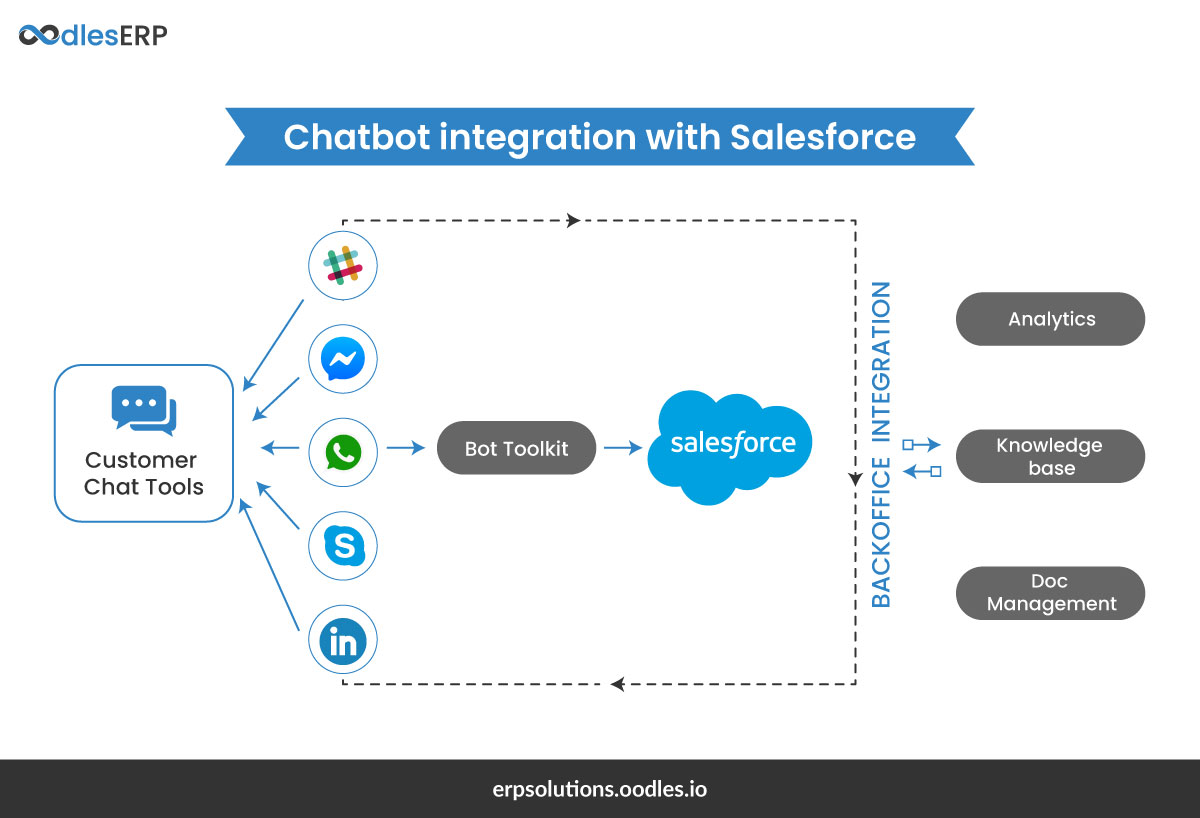
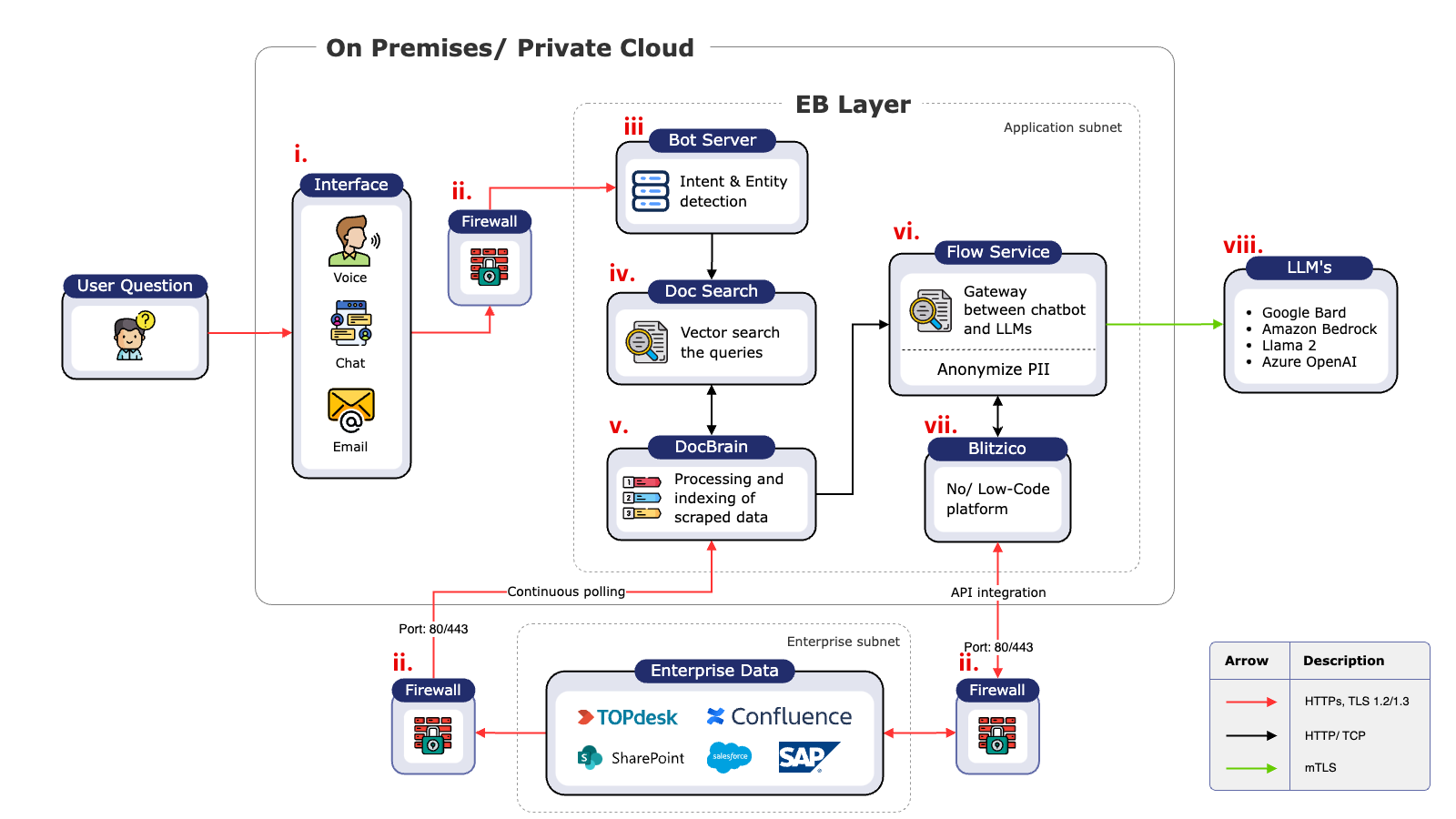
At a system level, Solr integration with a chatbot works as follows:
- User asks a question
- Chatbot analyzes intent
- Query is sent to Solr
- Solr retrieves relevant data
- Results are ranked and filtered
- Clean context is prepared
- AI model generates a response
- Response is delivered to the user
Thus, Solr acts as the knowledge layer, while the chatbot acts as the interaction layer.
Core Components of Solr Integration with Chatbots
1. Data Ingestion into Solr
First, enterprise data is ingested into Solr. This includes:
- Documents (PDFs, HTML, Word files)
- Databases
- Knowledge bases
- FAQs
- Support tickets
- Logs and records
As a result, Solr becomes the central knowledge repository for the chatbot.
2. Indexing and Data Structuring
Next, Solr indexes data using:
- Full-text indexing
- Metadata tagging
- Schema-based structuring
- Optional vector embeddings
Therefore, data becomes searchable, filterable, and retrievable at scale.
3. Query Understanding in the Chatbot
The chatbot analyzes the user query using AI models.
This includes:
- Natural language understanding
- Intent detection
- Query classification
- Context awareness
As a result, the chatbot knows what type of information to retrieve from Solr.
4. Intelligent Retrieval from Solr
The chatbot queries Solr using:
- Keyword-based queries
- Semantic similarity queries
- Metadata filters
- Permission-based access rules
Therefore, retrieval is both accurate and governed.
5. Ranking and Filtering
Retrieved results are then:
- Ranked by relevance
- Deduplicated
- Filtered for quality
- Cleaned for noise
As a result, only high-value content is passed to the AI model.
6. Context Assembly
Next, the system structures retrieved data into usable context.
This includes:
- Logical ordering
- Formatting
- Token control
- Instruction injection
Therefore, the AI model receives clean, relevant context.
7. Response Generation
The AI model generates a response using:
- User query
- Solr-retrieved context
- System instructions
As a result, the chatbot produces grounded, data-driven answers.
8. Validation and Delivery
Finally, responses may be:
- Validated
- Formatted
- Logged
- Audited
Then, the chatbot delivers the final response to the user.
Solr-Integrated Chatbot vs Traditional Chatbot
| Feature | Traditional Chatbot | Solr-Integrated Chatbot |
|---|---|---|
| Data source | Scripts | Real data |
| Accuracy | Low | High |
| Scalability | Limited | Enterprise-grade |
| Governance | Minimal | Built-in |
| Trust | Low | High |
Therefore, Solr integration transforms chatbots into reliable AI systems.
Use Cases of Solr-Integrated Chatbots
Solr-powered chatbots are widely used in:
- Enterprise knowledge assistants
- Customer support platforms
- Research assistants
- Compliance systems
- Internal business automation tools
In each case, Solr ensures truth, while the chatbot ensures interaction.
Engineering Challenges
However, building Solr-integrated chatbots introduces challenges.
These include:
- Data quality management
- Solr schema design
- Latency optimization
- Prompt size limits
- Monitoring and observability
Therefore, strong system architecture is required.
Best Practices for Solr Integration with Chatbots in 2026
To build reliable systems:
- Use Solr as a single source of truth
- Apply hybrid retrieval strategies
- Enforce strict access control
- Limit context aggressively
- Monitor retrieval accuracy
- Validate AI outputs
As a result, systems remain stable, scalable, and trustworthy.
Future of Solr-Integrated Chatbots
Looking ahead, Solr-integrated chatbots will evolve into:
- Multi-agent systems
- Autonomous digital assistants
- Workflow automation platforms
- Enterprise intelligence interfaces
Therefore, chatbots will no longer be just interfaces — they will become operational AI systems.
Final Thoughts
In 2026, chatbots must be more than conversational. They must be accurate, scalable, and reliable.
By integrating Solr with chatbots, organizations achieve:
- Strong data grounding
- Intelligent retrieval
- Trustworthy responses
- Enterprise-level scalability
This architecture transforms chatbots from simple conversation tools into enterprise-grade intelligence systems.
Ultimately, Solr integration with chatbots represents the future of trusted, data-driven AI communication platforms.