
Introduction
Artificial Intelligence is rapidly transforming how enterprises manage data, automate processes, and deliver intelligent experiences. However, traditional AI models face a major limitation — they rely only on the data they were trained on. This creates challenges for enterprises that need real-time, accurate, and domain-specific information.
This is where Enterprise RAG Systems come into play.
Retrieval-Augmented Generation (RAG) systems combine the power of large language models with enterprise data sources to deliver context-aware, accurate, and secure AI responses. In this blog, we’ll explore what how they work, their architecture, benefits, use cases, and why they are becoming essential for modern enterprises.
What Are Enterprise RAG Systems?
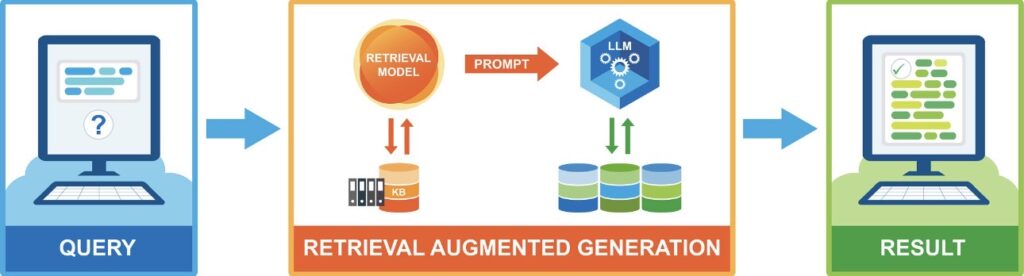
Enterprise RAG systems are advanced AI architectures that integrate information retrieval with text generation. Instead of relying only on a pre-trained language model, a RAG system retrieves relevant information from enterprise data sources and uses it to generate accurate and grounded responses.
In simple terms:
- Retrieval fetches relevant enterprise data
- Generation produces human-like responses using that data
This approach ensures AI outputs are factual, up-to-date, and aligned with internal business knowledge.
Why Traditional AI Models Are Not Enough for Enterprises
Large language models are powerful, but enterprises face several challenges when using them directly:
- Lack of access to proprietary enterprise data
- Risk of hallucinated or inaccurate responses
- Compliance and data security concerns
- Difficulty handling dynamic, frequently changing data
Enterprise RAG systems solve these problems by grounding AI responses in verified knowledge.
How Enterprise RAG Systems Work
An enterprise RAG system follows a structured workflow:
1. Data Ingestion
Enterprise data is collected from multiple sources such as:
- Internal documents
- Databases
- Knowledge bases
- APIs
- Cloud storage
2. Data Processing & Embedding
The ingested data is cleaned, structured, and converted into vector embeddings using embedding models. These embeddings represent semantic meaning.
3. Vector Database Storage
The embeddings are stored in a vector database, allowing fast and accurate semantic search.
4. Query Retrieval
When a user asks a question, the system retrieves the most relevant data chunks from the vector database.
5. Response Generation
The retrieved context is passed to a language model, which generates a response grounded in enterprise data.
Enterprise RAG Architecture Overview
A typical enterprise RAG architecture includes:
- Data Sources (Documents, APIs, Databases)
- Data Processing Pipelines
- Embedding Models
- Vector Databases
- Retrieval Engine
- Large Language Model
- Security & Access Control Layer
This modular architecture allows enterprises to scale, customize, and secure their AI systems effectively.
Key Benefits
1. Improved Accuracy
By using enterprise data as context, RAG systems significantly reduce hallucinations and incorrect answers.
2. Data Privacy & Security
Sensitive enterprise data remains within controlled systems, ensuring compliance with security standards.
3. Real-Time Knowledge Access
RAG systems can access updated data, making AI responses current and relevant.
4. Scalability
can scale across departments, use cases, and global teams.
5. Customization
Enterprises can fine-tune retrieval logic, data sources, and output styles.
Common Enterprise Use Cases of RAG Systems
Internal Knowledge Assistants
Employees can query internal documents, policies, and manuals using natural language.
Customer Support Automation
RAG-powered chatbots provide accurate responses using support documentation and FAQs.
Business Intelligence & Analytics
Executives can ask data-driven questions and receive contextual insights.
Legal & Compliance Systems
RAG systems can retrieve regulatory documents and generate compliance summaries.
HR & Training Platforms
Employees receive role-specific learning and onboarding assistance.
Security Considerations in Enterprise RAG Systems
Security is critical when deploying RAG systems in enterprise environments. Key considerations include:
- Role-based access control (RBAC)
- Data encryption at rest and in transit
- Secure API integrations
- Audit logs and monitoring
- Compliance with industry standards
A well-designed enterprise RAG system ensures that sensitive data is accessed only by authorized users.
Challenges in Implementing Enterprise RAG Systems
Despite their benefits, enterprises may face challenges such as:
- Complex data integration
- High infrastructure costs
- Performance optimization
- Data quality management
- Governance and compliance requirements
These challenges highlight the importance of working with experienced IT solution providers.
Best Practices for Building Enterprise RAG Systems
- Start with clearly defined use cases
- Ensure high-quality, well-structured data
- Choose scalable vector databases
- Implement strong security controls
- Continuously evaluate model performance
Following best practices ensures long-term success and ROI.
Future of Enterprise RAG Systems
As enterprises continue adopting AI, RAG systems will play a central role in enabling trustworthy and explainable AI solutions. With advancements in embeddings, vector search, and LLMs will become more efficient, secure, and intelligent.
Why Enterprises Need RAG Systems Today
In today’s data-driven world, enterprises cannot afford inaccurate or outdated AI responses. bridge the gap between AI intelligence and enterprise knowledge, empowering organizations to make informed decisions faster.
Conclusion
Enterprise RAG systems represent the next evolution of enterprise AI. By combining retrieval and generation, they deliver accurate, secure, and context-aware intelligence tailored to business needs.
Organizations that adopt today will gain a competitive edge by unlocking the true value of their data.
Great breakdown of Enterprise RAG systems. The focus on architecture, scalability, and governance makes it very relevant for real-world enterprise deployments. Clear and practical insights throughout.