Artificial intelligence is transforming how modern organizations manage information, automate workflows, and assist employees. From AI assistants to automated analytics tools, companies are increasingly integrating AI into their daily operations.
However, as AI systems gain access to internal data, they also introduce new security risks. These systems may interact with confidential documents, customer information, financial data, and proprietary company knowledge.
Without proper safeguards, AI tools could accidentally expose sensitive information or generate responses that reveal restricted data. To address this challenge, organizations are implementing AI guardrails to protect their most valuable information assets.
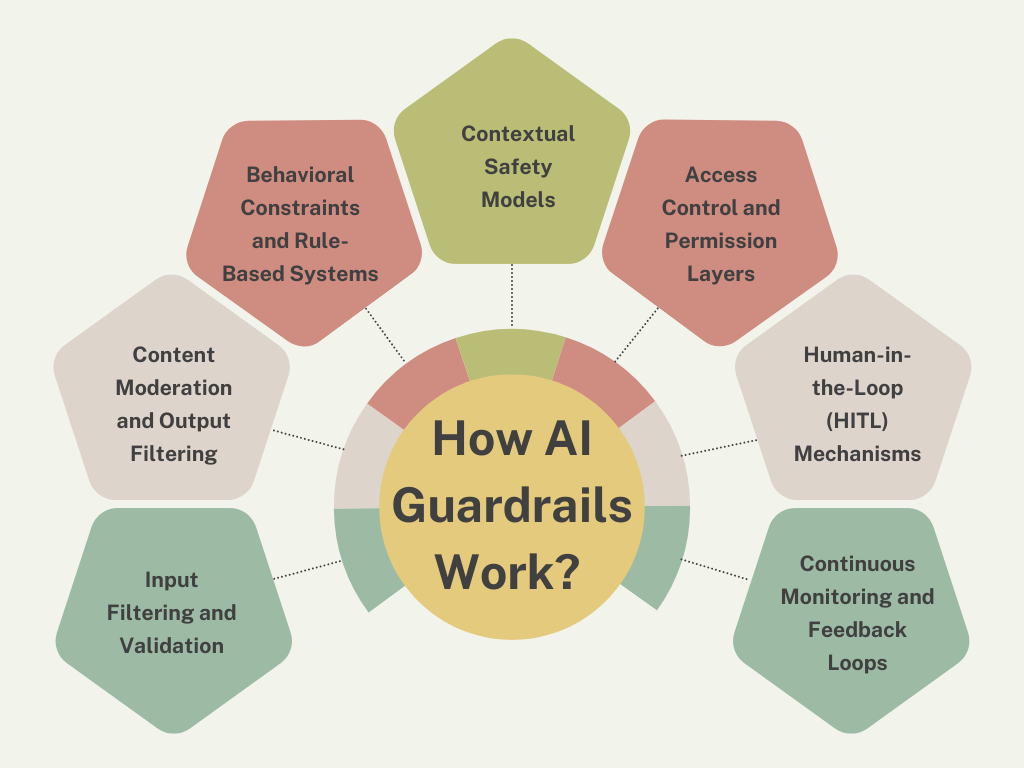
AI guardrails act as protective mechanisms that control how artificial intelligence systems access, process, and respond with enterprise data. By implementing strong guardrail systems, companies can safely use AI technologies while maintaining strict data security standards.
In this article, we will explore how AI guardrails help protect sensitive company data, the technologies behind them, and why they are becoming essential for enterprise AI deployments.
Why Protecting Sensitive Data Is Critical for Businesses
Data has become one of the most valuable assets for modern organizations. Companies rely on internal data to guide business decisions, manage operations, and maintain competitive advantages.
Sensitive company data may include:
- Customer personal information
- Financial records
- Internal reports and documents
- Intellectual property
- Product development data
- Employee information
If this information is exposed or misused, the consequences can be serious. Businesses may face financial losses, legal penalties, and reputational damage.
As organizations adopt AI tools that interact with internal knowledge bases and databases, ensuring data protection becomes even more important.
The Risks of Using AI Without Data Protection Controls
AI systems are designed to process large volumes of information and generate responses quickly. However, if these systems are deployed without proper controls, they may create new security risks.
Accidental Data Exposure
AI assistants connected to internal systems may unintentionally reveal confidential information if guardrails are not in place.
Unauthorized Access to Information
Without proper access control mechanisms, AI systems may retrieve sensitive data for users who are not authorized to view it.
AI Hallucinations Involving Sensitive Data
AI models may generate incorrect statements about company policies, financial information, or confidential projects.
Compliance and Regulatory Violations
Many industries must follow strict data protection regulations. Improper AI responses could lead to compliance violations and legal consequences.
Because of these risks, enterprises must implement structured AI governance systems before deploying AI tools.
What Are AI Guardrails?
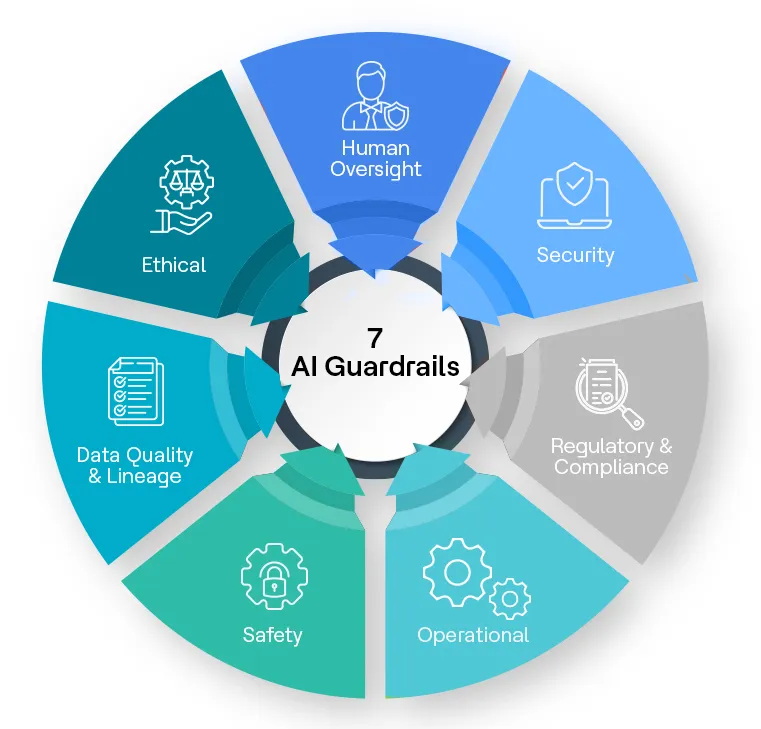
AI guardrails are safety and control mechanisms that ensure artificial intelligence systems operate within defined boundaries.
These mechanisms guide how AI models interact with users, access information, and generate responses.
Instead of allowing unrestricted AI outputs, guardrails enforce policies that ensure responses remain accurate, secure, and compliant with company standards.
Guardrails work across several layers of the AI system, including:
- User input monitoring
- Knowledge retrieval controls
- Data access permissions
- Output filtering and validation
Together, these mechanisms create a secure framework for deploying AI within enterprise environments.
How AI Guardrails Protect Sensitive Company Data
AI guardrails use several strategies to prevent data leaks and ensure responsible AI behavior.
Access Control and Permission Management
One of the most important guardrail mechanisms is access control.
Organizations often store sensitive information in internal databases and document repositories. Guardrails enforce permission-based access rules so that AI systems only retrieve data that users are authorized to see.
For example, financial reports may only be accessible to certain departments, while general product documentation may be available to all employees.
By enforcing these permissions, guardrails prevent unauthorized data exposure.
Retrieval-Augmented Generation (RAG)
Many modern AI systems use retrieval-augmented generation (RAG) to provide accurate responses.
Instead of generating answers purely from training data, the system first retrieves relevant information from verified enterprise knowledge sources.
These sources may include:
- Company knowledge bases
- Internal documentation
- Support articles
- Product databases
Guardrails ensure that AI responses rely on these trusted sources rather than speculative information.
Input Monitoring and Filtering
Guardrails also analyze user queries before they reach the AI model.
If a user attempts to access restricted data or requests confidential information, the system can block the request or redirect the user.
This prevents sensitive data from being exposed through AI interactions.
Output Validation
Even after the AI generates a response, guardrails perform additional validation checks.
Content moderation and validation systems review the generated response to ensure it does not include restricted data or policy violations.
If a response fails validation, the system can block it or replace it with a safer message.
Continuous Monitoring and Logging
AI guardrails also include monitoring systems that track AI behavior over time.
Logs help organizations identify unusual activity patterns, potential vulnerabilities, or repeated errors in AI responses.
Continuous monitoring allows organizations to improve guardrail policies and maintain secure AI operations.
Technologies Behind AI Guardrail Systems
Several technologies enable the implementation of strong AI guardrails.
Vector Search
Vector search allows AI systems to retrieve relevant information based on semantic similarity rather than simple keyword matching.
This improves the accuracy of information retrieval.
Enterprise Knowledge Indexing
Organizations often maintain large collections of documents and data.
Knowledge indexing organizes this information so AI systems can retrieve relevant content efficiently and securely.
Content Moderation Models
Content moderation models analyze AI-generated responses to detect unsafe language, restricted data, or policy violations.
AI Governance Frameworks
Enterprises often create governance frameworks that define how AI systems should behave, what data they can access, and how responses should be monitored.
Guardrails enforce these policies automatically.
Benefits of Implementing AI Guardrails
Organizations that implement AI guardrails gain several strategic benefits.
Stronger Data Security
Guardrails ensure that sensitive information remains protected.
Reduced Risk of Data Breaches
By controlling how AI systems access information, businesses reduce the risk of accidental data exposure.
Regulatory Compliance
Guardrails help organizations comply with data protection regulations.
Increased Trust in AI Systems
Employees and customers are more likely to trust AI systems that operate safely and reliably.
Scalable AI Adoption
Guardrails enable organizations to scale AI systems across departments without compromising security.
Real-World Applications
AI guardrails are being used across multiple industries to protect sensitive information.
Financial Institutions
Banks use guardrails to prevent AI systems from revealing confidential financial data.
Healthcare Organizations
Healthcare providers ensure patient data remains secure when using AI-powered assistants.
Technology Companies
Tech firms use guardrails to protect intellectual property and internal documentation.
Customer Support Systems
Customer-facing AI assistants rely on guardrails to prevent exposure of internal company information.
Industry Reviews and Expert Perspectives
Technology leaders and AI governance experts consistently emphasize the importance of implementing guardrails when deploying enterprise AI systems.
Many organizations report significant improvements in data protection and response reliability after introducing guardrail frameworks.
Customer support teams also highlight that guardrails help prevent incorrect or sensitive responses from reaching users.
Experts in responsible AI development believe that guardrails will become a fundamental component of enterprise AI infrastructure as adoption continues to grow.
The Future of AI Data Protection
As AI technologies continue to evolve, organizations will increasingly focus on building secure and trustworthy AI systems.
Future AI platforms will combine advanced reasoning capabilities with strong security frameworks that ensure responsible use of enterprise data.
AI guardrails will play a central role in this evolution by providing the controls needed to safely integrate AI into business operations.
Companies that prioritize data protection and responsible AI governance will be better positioned to scale AI technologies while maintaining trust and security.
Frequently Asked Questions
What are AI guardrails?
AI guardrails are safety mechanisms that control how artificial intelligence systems access data and generate responses.
Why are AI guardrails important for protecting company data?
Guardrails prevent AI systems from exposing confidential information and ensure that responses follow company security policies.
Can AI guardrails prevent data leaks?
Yes. Guardrails enforce access controls, monitor queries, and validate responses to reduce the risk of data exposure.
Do enterprises need guardrails before deploying AI systems?
Yes. Guardrails help ensure AI systems operate safely, protect sensitive data, and comply with regulations.
What technologies support AI guardrails?
Technologies such as vector search, knowledge indexing, content moderation models, and governance frameworks support AI guardrail systems.