
Artificial intelligence is no longer limited to answering questions or generating text. In 2026, organizations are actively building agentic AI systems — AI systems that can think in steps, plan actions, retrieve data, and execute tasks autonomously. However, autonomy without control quickly becomes a risk. Therefore, modern AI systems require a reliable, structured, and governed data foundation.
This is exactly where Solr integration with agentic AI becomes critical.
By integrating Apache Solr with agentic AI, organizations can create intelligent systems that are not only autonomous but also accurate, explainable, and enterprise-ready. As a result, AI moves from being a conversational tool to becoming a trusted operational system.
This article explains how Solr integrates with agentic AI, why this architecture matters in 2026, and how Exuverse is building next-generation AI platforms using this powerful combination.
Understanding Agentic AI
Agentic AI refers to AI systems that are goal-driven rather than query-driven. Instead of simply responding to prompts, agentic AI systems:
- Understand objectives
- Break goals into steps
- Retrieve information dynamically
- Use tools and APIs
- Evaluate outcomes
- Take autonomous actions
Therefore, agentic AI behaves more like a digital worker than a chatbot.
However, intelligence alone is not enough. If agents operate on incorrect or hallucinated information, they become unreliable. Because of this, data grounding is essential for agentic systems to function safely and effectively.
Why Solr Is Essential for Agentic AI
Apache Solr is a proven enterprise-grade search and retrieval engine. Unlike pure vector databases, Solr provides hybrid retrieval, which is critical for real-world AI systems.
Solr offers:
- Lexical search for exact matches
- Semantic (vector) search for meaning
- Structured filtering and metadata support
- Access control and security layers
- High availability and scalability
Because of this, Solr becomes the truth layer of the AI system.
Therefore, instead of agents relying on probabilistic memory, they rely on verified, indexed enterprise data stored in Solr.
Why Solr Integration with Agentic AI Matters in 2026
In 2026, AI is no longer experimental. Instead, it is deployed in mission-critical environments such as:
- Compliance systems
- Enterprise knowledge platforms
- Customer support automation
- Research and analytics
- Operations and workflow automation
Because of this, reliability, governance, and traceability are mandatory. Consequently, integrating Solr with agentic AI is not an optimization — it is a core architectural requirement.
High-Level Architecture: Solr + Agentic AI
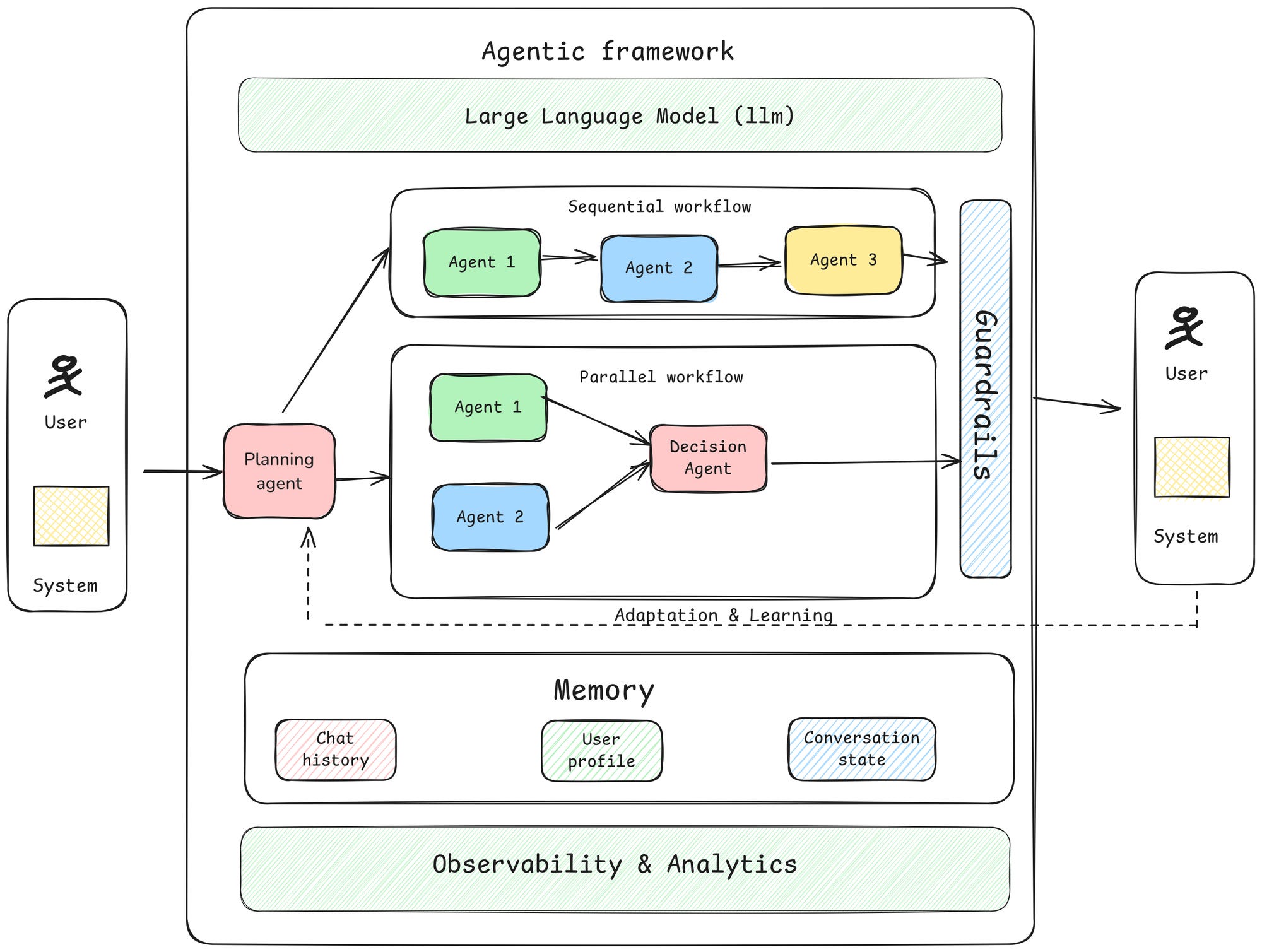


At a system level, the integration works as follows:
- A user or system defines a goal
- The agentic AI decomposes the goal into tasks
- The agent queries Solr for relevant data
- Solr performs hybrid retrieval
- Results are ranked and filtered
- Clean context is assembled
- The AI model reasons over the data
- The agent executes actions or generates outputs
Thus, Solr becomes the knowledge and memory layer, while agentic AI becomes the reasoning and execution layer.
Core Components of Solr Integration with Agentic AI
1. Data Ingestion into Solr
First, enterprise data is ingested into Solr. This includes:
- Documents (PDFs, HTML, Word files)
- Databases
- Knowledge bases
- Logs and structured records
- Internal business data
As a result, Solr becomes the centralized enterprise knowledge repository.
2. Hybrid Indexing in Solr
Next, Solr indexes data using:
- Lexical indexing for precision
- Vector indexing for semantic similarity
Therefore, Solr supports hybrid search, which is essential for agentic systems that require both accuracy and flexibility.
3. Agentic Planning Layer
Then, the agentic AI system analyzes the goal and decides:
- What information is required
- Which sources must be queried
- How many retrieval steps are needed
- Which tools should be used
As a result, retrieval becomes intent-driven, not random.
4. Intelligent Retrieval from Solr
Agents query Solr using:
- Keyword queries
- Vector similarity queries
- Metadata filters
- Permission-based rules
Therefore, retrieval is both accurate and governed.
5. Context Assembly and Structuring
Retrieved data is then:
- Ranked by relevance
- Deduplicated
- Cleaned
- Structured into context blocks
As a result, the AI model receives high-quality, noise-free context.
6. Reasoning and Decision Layer
The AI model reasons over Solr-provided data.
At this stage:
- Hallucinations are minimized
- Reasoning is grounded in facts
- Outputs are traceable to sources
Therefore, agentic AI becomes intelligent and trustworthy.
7. Autonomous Action Execution
Finally, the agent executes actions such as:
- Triggering workflows
- Calling APIs
- Updating systems
- Generating reports
- Automating business processes
Thus, the system moves from conversation to real operational automation.
Solr + Agentic AI vs Traditional AI Systems
| Feature | Traditional AI | Solr + Agentic AI |
|---|---|---|
| Data grounding | Weak | Strong |
| Accuracy | Probabilistic | Data-driven |
| Automation | Limited | High |
| Governance | Minimal | Built-in |
| Enterprise readiness | Low | High |
Therefore, integration transforms AI from a tool into a reliable enterprise system.
Enterprise Use Cases
Solr integration with agentic AI enables powerful real-world solutions:
- Enterprise knowledge automation
- Compliance and risk intelligence
- Customer support automation
- Research and data analysis
- Operational workflow automation
In each case, Solr provides truth, while agentic AI provides intelligence.
Engineering Challenges
However, building this integration is complex.
Challenges include:
- Data normalization and quality control
- Solr schema and index design
- Latency optimization
- Prompt context limits
- System observability and monitoring
Therefore, strong system architecture is required.
Best Practices for Solr + Agentic AI Integration
To build reliable systems in 2026:
- Use Solr as the single source of truth
- Separate retrieval and reasoning layers
- Enforce strict access control
- Limit context aggressively
- Monitor retrieval accuracy
- Validate AI outputs before action
As a result, systems remain stable and scalable.
Role of Exuverse in Solr + Agentic AI Systems
At Exuverse, AI is treated as a full-stack system problem, not just a model problem.
Exuverse builds enterprise-grade AI platforms by:
- Designing scalable Solr architectures
- Building hybrid retrieval pipelines
- Creating agentic orchestration layers
- Implementing governance and security
- Delivering production-ready AI systems
Because of this approach, Exuverse does not just integrate AI technologies — it builds intelligent digital infrastructures that organizations can trust.
Future of Solr Integration with Agentic AI
Looking ahead, this integration will evolve into:
- Self-optimizing retrieval pipelines
- Multi-agent collaboration systems
- Autonomous enterprise operations
- AI-driven decision ecosystems
Therefore, Solr will evolve from a search engine into a core enterprise intelligence layer.
Final Thoughts
In 2026, AI systems must be more than smart — they must be reliable, governed, and actionable.
By integrating Solr with agentic AI, organizations achieve:
- Accurate data grounding
- Intelligent reasoning
- Autonomous execution
- Enterprise-level trust
This architecture transforms AI from a conversational interface into a true enterprise intelligence system.
With Exuverse building advanced AI platforms around this integration model, Solr + agentic AI is rapidly becoming the foundation of next-generation enterprise AI systems.