
Search has always been about one simple goal: showing the most relevant result for a user’s query. However, as data volumes grow and user expectations increase, traditional keyword-based search systems are no longer sufficient. Because of this, AI-powered search relevancy has become the foundation of modern search platforms.
In 2026, search relevancy is no longer driven by static rules or basic keyword matching. Instead, it is powered by machine learning, natural language understanding, and contextual intelligence. As a result, AI enables search systems to understand intent, meaning, and context rather than just matching words.
This article explains search relevancy using AI, how it works, why it matters, and how modern systems are designed to deliver highly accurate search results.
What Is Search Relevancy?
Search relevancy refers to how well a search system’s results match the user’s intent. In other words, it measures whether the results actually answer what the user is looking for.
Traditionally, relevancy was calculated using:
- Keyword frequency
- Exact match rules
- Static ranking algorithms
However, these methods often failed when queries were vague, conversational, or context-dependent. Therefore, AI was introduced to improve how search systems interpret and rank results.
Why Traditional Search Relevancy Falls Short
Initially, keyword-based search worked well for structured and predictable queries. However, modern users search differently.
For example:
- Users ask full questions instead of typing keywords
- Queries often have multiple meanings
- Context and intent matter more than exact terms
Because of these changes, traditional search systems struggle with:
- Synonyms and paraphrasing
- Ambiguous queries
- Long-tail searches
- Unstructured data
As a result, search relevancy suffers unless AI is introduced into the system.
How AI Improves Search Relevancy
AI enhances search relevancy by allowing systems to understand meaning instead of matching words. Moreover, AI enables continuous learning from user behavior and feedback.
Key AI capabilities that improve search relevancy include:
- Natural Language Processing (NLP)
- Machine Learning ranking models
- Semantic understanding
- Behavioral analytics
Therefore, AI-powered search systems deliver results that feel more human and intuitive.
Core Components of AI-Driven Search Relevancy
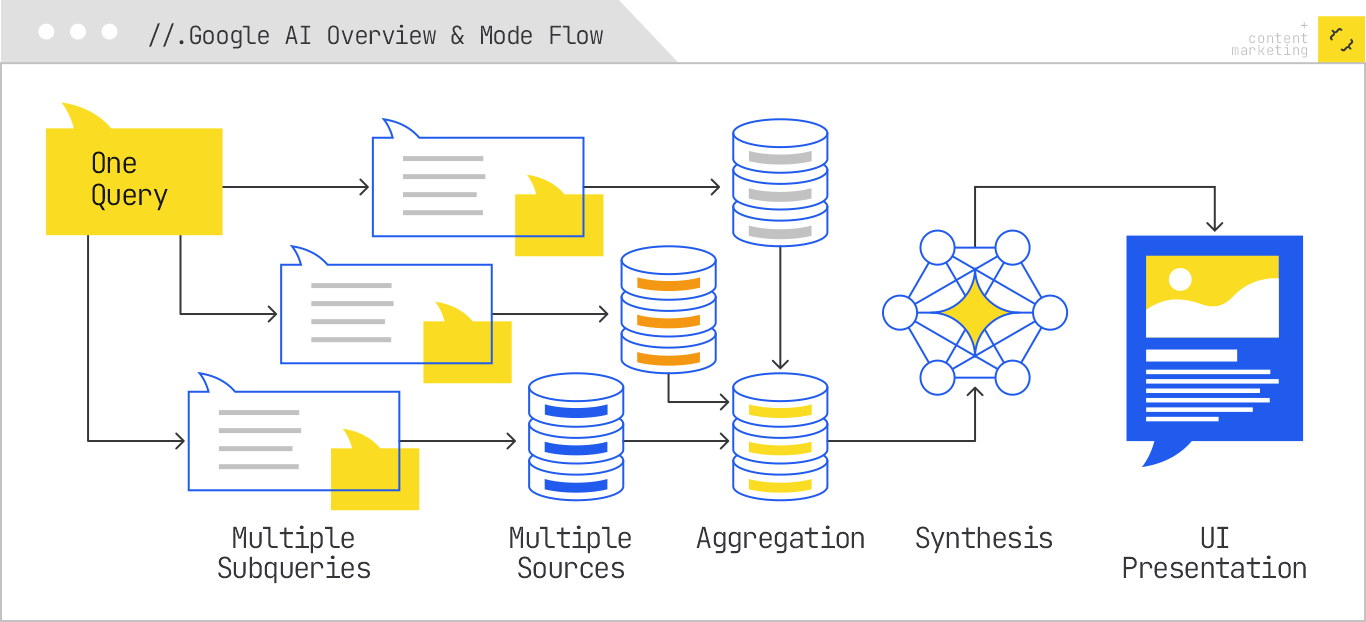

1. Query Understanding and Intent Detection
First of all, AI-based search systems analyze the query to understand what the user actually wants.
Instead of focusing on keywords alone, AI evaluates:
- Query structure
- Context
- Past user behavior
- Semantic meaning
As a result, the system can distinguish between informational, navigational, and transactional queries.
2. Semantic Search and Embeddings
Next, AI introduces semantic search, which focuses on meaning rather than exact words.
Semantic search works by:
- Converting text into numerical vectors
- Measuring similarity between queries and documents
- Matching concepts instead of keywords
Therefore, even if a document does not contain the exact query terms, it can still rank highly if it matches the intent.
3. Hybrid Search for Higher Relevancy
However, semantic search alone is not always enough. Because of this, modern systems use hybrid search.
Hybrid search combines:
- Keyword-based search for precision
- Semantic search for contextual understanding
As a result, search systems achieve both accuracy and recall, which significantly improves relevancy.
4. AI-Based Ranking Models
Once results are retrieved, AI plays a crucial role in ranking them.
Machine learning ranking models consider:
- Query-document relevance
- User engagement signals
- Freshness of content
- Authority and credibility
Therefore, results are ordered dynamically instead of relying on fixed ranking rules.
5. Personalization and Context Awareness
In 2026, relevancy is often user-specific.
AI-powered systems personalize results using:
- User location
- Search history
- Role or profile
- Device and time context
As a result, two users searching the same query may see different but equally relevant results.
6. Continuous Learning and Feedback Loops
One of the biggest advantages of AI is its ability to learn continuously.
AI-driven search systems improve relevancy by:
- Tracking clicks and dwell time
- Learning from skipped results
- Adjusting rankings automatically
Consequently, search relevancy improves over time without manual tuning.
AI Search Relevancy vs Traditional Search
| Aspect | Traditional Search | AI-Driven Search |
|---|---|---|
| Matching | Keywords | Meaning & intent |
| Ranking | Rule-based | ML-based |
| Personalization | None | Context-aware |
| Adaptability | Static | Continuous learning |
| Accuracy | Limited | High |
Thus, AI fundamentally transforms how search relevancy is achieved.
Role of AI Models in Search Relevancy
Different AI models contribute to search relevancy in different ways.
For example:
- NLP models understand language structure
- Embedding models capture semantic meaning
- Ranking models optimize result order
- Classification models detect intent
Therefore, modern search systems rely on multiple AI models working together.
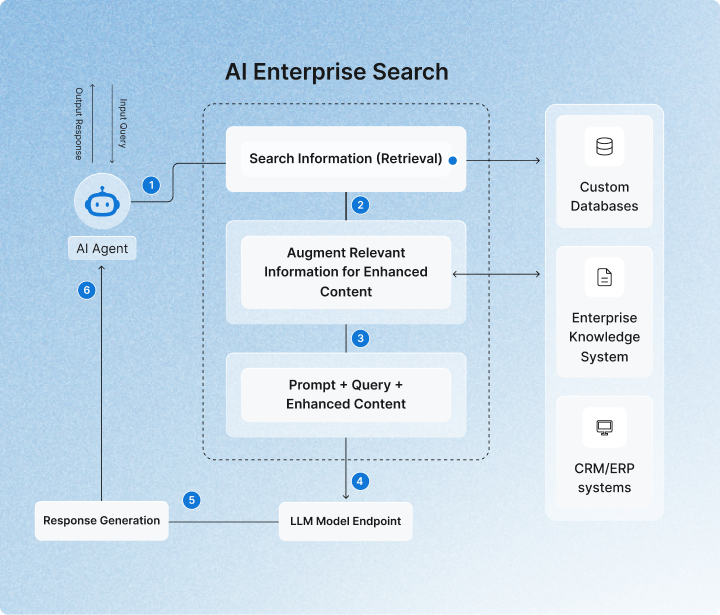
Search Relevancy in Enterprise Systems
In enterprise environments, search relevancy becomes even more critical.
Enterprise AI search must handle:
- Large volumes of unstructured data
- Strict access control
- Domain-specific terminology
- High accuracy requirements
Because of this, AI-based relevancy models are often customized for specific industries and use cases.
Common Use Cases of AI-Based Search Relevancy
AI-driven search relevancy is widely used in:
- Enterprise knowledge bases
- Customer support portals
- E-commerce product search
- Research and analytics platforms
- Internal document management systems
In each case, AI ensures users find the right information faster.
Challenges in Implementing AI Search Relevancy
Despite its benefits, AI-based search relevancy introduces challenges.
For instance:
- Data quality directly impacts results
- Model bias can affect ranking fairness
- Latency must be carefully managed
- Relevancy evaluation is complex
Therefore, successful implementations require both AI expertise and system design discipline.
Best Practices for Improving Search Relevancy Using AI
To build effective AI-powered search systems, teams should follow these best practices:
- Combine semantic and keyword search
- Use feedback loops for continuous learning
- Monitor relevancy metrics regularly
- Limit over-personalization
- Validate results with real users
As a result, search systems remain accurate, scalable, and trustworthy.
The Future of Search Relevancy Using AI
Looking ahead, AI-driven search relevancy will continue to evolve.
In the coming years, search systems will:
- Anticipate user intent proactively
- Integrate with conversational interfaces
- Support multimodal search (text, image, voice)
- Adapt in real time to user behavior
Consequently, search will feel less like querying a system and more like interacting with an intelligent assistant.
Final Thoughts
In conclusion, search relevancy using AI is no longer a competitive advantage—it is a necessity. As data grows and user expectations rise, traditional search methods simply cannot keep up.
By leveraging AI for:
- Intent understanding
- Semantic matching
- Intelligent ranking
- Continuous learning
modern search systems deliver results that are accurate, contextual, and meaningful.
Ultimately, the success of any search platform in 2026 depends on how effectively AI is used to drive relevancy.